Saturday, January 18, 2020

Dyscalculia

As I write this post, the wind and snow are swirling around the house, education in Ontario is in a state of unrest, Newfoundland/Labrador has been pounded by a storm of horrific magnitude, Canada is still negotiating with Iran, and Harry and Meghan have been 'unroyaled' or is it 'deroyaled'?  Those are made-up words for that news story that keeps our minds off the others.

So how are you doing?  Ready to step back into the world of Fact Sheets about different ways of learning and thinking?  I'm going to tackle two this week (and the good thing about online publishing is that it allows me to go back and change this!)

So here's the first one (I'm being pedantic by adding the Fact Sheets from understood.org as they appeared in the original email.  The six Fact sheets are: Dyslexia (last post); ADHD; Dyscalculia; Slow Processing Speed; Sensory Processing; and DCD.  I've linked all six in case you want to get ahead of me!

ADHD


I tackled this topic in several posts last year (!) so I won't spend any more time on it.  My biggest concern for children is summed up in the statement above: ADHD isn't caused by laziness or lack of discipline.  Too many children have been incorrectly and unfairly judged as lazy or undisciplined.  The other concern falls under the Ways to help  category - finding strategies for coping with anxiety.

Dyscalculia


Up to 7% of elementary school students have dyscalculia. Research suggests it's as common as dyslexia -- a reading disorder -- but not as well understood. In fact, kids and parents sometimes call it “math dyslexia,” but this can be confusing because dyscalculia is a completely different condition. Kids with dyscalculia may count on their fingers long after other children have stopped doing so.  

How Can I Help My Child?

The following suggestions are from the website linked above.  I've modified some of the ideas based on my experience.
   
Here are some things you can try to help your child better learn and understand math and lower her anxiety:
  • Let her use her fingers and paper when she counts. My experience with students I suspect have dyscalculia is that their fingers move far faster than I can imagine. The problem with using fingers is that it eventually will not be as helpful when we're talking more difficult math problems.
  • Make sure she has the right tools, like an easy-to-use calculator and plenty of erasers. It is really important to get the teacher's buy-in for this.  It's also why it's important to have testing done to ensure that this is the appropriate diagnosis.  And once you have that, you can have an IEP that will - should - allow these accommodations. I'd add that having a multiplication chart close by is a real asset as well.  Have it laminated or put into a plastic sleeve and taped to your child's desk.  
  • Use graph paper. It helps keep columns and numbers straight and neat. This is really important and the bigger the grid the better because lots of children don't print small!  This link is to 1/2 inch grid. This is 1 cm grid paper, perhaps more useful.
  • Use rhythm and music to teach math facts and steps. I've worked with a student who had no problems with the algorithms (knowing how to add, multiply etc.) but could not remember the math facts.  In fact, I started learning about dyscalculia after entering a search quest for: "Can't remember number facts"  and up popped understood.org with information about dyscalculia.  
  • Get an experienced math tutor to help. I'm here!!
  • Draw pictures of math word problems. This is a really important strategy and it reminds me that I should do a post about the different problem solving strategies!
  • Schedule computer time to play math games. How's this - play x number of minutes on a math game/app to earn y number of minutes of another online game.  
  • Praise her hard work, not the outcome. 
  • Talk with her about her learning disability.
  • Teach her ways to manage anxiety.

Some Math Game Apps

  1. Quick Math Jr is one of the best apps I've seen for younger kids (and kids struggling and needing confidence.)  There is a free version; I purchased the upgrade.  My students are most eager to play this game.  Little side story - a few years ago when travelling in Italy, John and I stepped outside our comfort zone and as part of a package to get to know more about Italy, we had dinner with a family in Florence.  The two young daughters did not have much English but I gave them my iPad and showed them the game.  Within minutes they were playing away.  Here's a link to a review.

  2. The big brother of Quick Math Jr is Quick Math.  It's a drill app for all four operations.  If your child is competitive this is a good game because it times how quickly you get through each set and then posts the score.  It is leveled, so you can choose both the operation (addition, subtraction, multiplication, and division) as well as Beginner and up.  I also like the fact that to answer the problems you have to 'write' with your finger directly on the screen so it encourages proper number formation.  Unfortunately I cannot find the app on Google Play, only iOS.  Beware - there are apps on Google Play called Quick Math but they are not from Shiny Things (the maker of Quick Math Jr and Quick Math).  

  3. Finally, there are so many apps out there.  Check out this page for reviews of Math apps on both iOS and Google Play.  I have downloaded only the Quick Math so far but intend to add more using these recommendations.  I'll keep you posted. Do not be put off by the reference to 4th Grade.  
Just before we get to the January cartoons, here's a link from ADDitude magazine about Dyscalulia in Adults because it's not just for kids!

Enjoy!


Tuesday, January 7, 2020

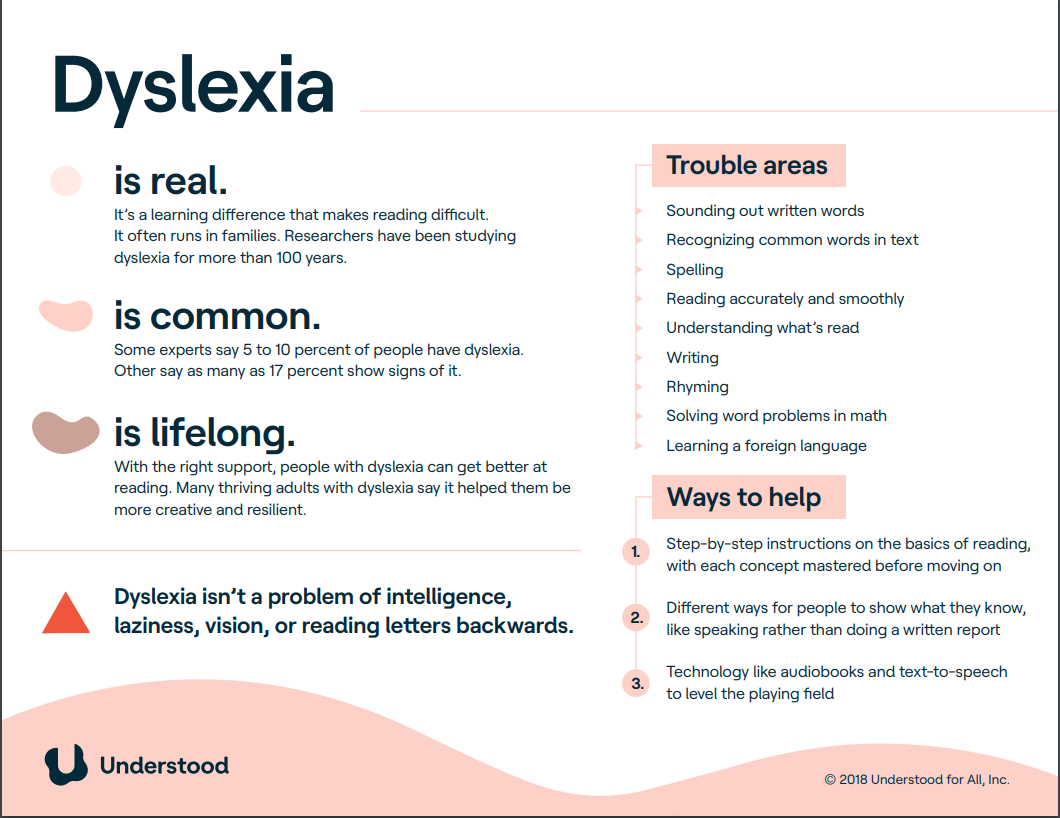
Dyslexia Fact Sheet


It's been a challenging start to a new decade but this is a Blog about keeping things positive and looking for ways to make things better for all our children.  Let's start the year with some fact sheets from understood.org that have basic information about various learning and thinking differences.  Share these posters with teachers, family members, and friends.  

I was going to include all six fact sheets in one post but realized that that would be too overwhelming for all of us (writer and reader!).  So let's do just one each week.  

I've included the link to the PDF for the fact sheet in the title of the section. Sidebar - I love it when I find a typo in these professionally produced illustrations.  Can you spot the typo in this first one?  (Corrine - you'll find it right away).

DYSLEXIA


Famous People with Dyslexia

  1. Jennifer Aniston - Aniston didn’t know she was dyslexic until she was in her 20s. She says finding out explained why it was so hard to read back in school and why she chose the role of class clown over teacher’s pet. The diagnosis answered a lot of questions. "I felt like all my childhood trauma-dies, tragedies, dramas, were explained."
  2. Steven Spielberg The movie mogul has had his own close encounter with dyslexia, though he didn’t know until he was 60 that he had the disorder. Bullied as a kid, he struggled through school and dropped out of college in 1968. Since then, the famed filmmaker has fought back using the big screen. The Goonies, a cult classic he co-wrote and produced, reflects Spielberg’s teen years as a self-proclaimed “nerd” and “outsider.”
  3. Whoopi Goldbergclass bullies called her “stupid.” The multi-talented Goldberg didn’t even find out she had dyslexia until well after she dropped out of school. 
  4. Henry WinklerBest known as “The Fonz” on Happy Days, this actor-turned-author was always one to improvise on the set. Winkler confesses his trouble reading was a big reason for going off-script. He says dyslexia also taught him kindness. You can see that when he talks about Hank Zipzer, “world’s greatest underachiever” and the main character in the children’s books he’s written about dyslexia.
  5. Richard BransonThe head of his high school predicted this British entrepreneur would end up in prison or become a millionaire. Try billionaire, with a “b,” many times over. Branson says dyslexia and what he describes as “a different way of thinking” have helped him succeed. Branson stars in a 2012 movie called The Big Picture: Rethinking Dyslexia
  6. Jay LenoThe comedian and former host of The Tonight Show says there wasn’t really a name for dyslexia when he was in high school -- everyone just told him to smarten up. It all turned around when a creative writing teacher suggested he put some of the funny stories he was always telling on paper. “That was the first time in my life I really focused on something.”
  7. Danny Glover  didn’t get the acting bug until his late 20s, and he didn’t know he was dyslexic until he was 30. Not having a diagnosis back then he felt “unworthy to learn.” But Glover found an escape in acting, which, he says, “gave me a way of expressing some of that inner life that was raging inside of me.”
  8. Kiera KnightleyDyslexia was both the carrot and the stick for this British-born Academy Award nominee. Getting good grades earned her time on stage, so she was eager to please. Behind the scenes, though, some classmates were just as eager to tease. “It’s amazing what a child calling you stupid would do to make you read pretty quickly,” Knightley recalls. She says dyslexia has made her the actress she is today.
Dyslexia was not well understood until the late 20th century. Even today it can be hard for doctors to diagnose. Given what we know now, many famous people may have had dyslexia, including Leonardo da Vinci, Saint Teresa, Napoleon, Winston Churchill, Carl Jung, Albert Einstein, and Thomas Edison.

As I read the mini-bios of the eight personalities I was saddened by the similarity of their stories - feeling less than positive about themselves, being bullied, not knowing about dyslexia until later in life, and the feeling of relief once they did know.  It's so important to follow up on your instincts if you suspect a child you know and love might be having trouble because of this learning difference.  


Finally, sometimes identifying with a character in a book can be helpful.  Check out these books that feature characters with dyslexia or ADHD.

Understood.org has over 525 links to searches about dyslexia on its website.  If you're having trouble filtering where to start, what to read, send me an email (gerriestorr@rogers.com) and I'll try to help.  

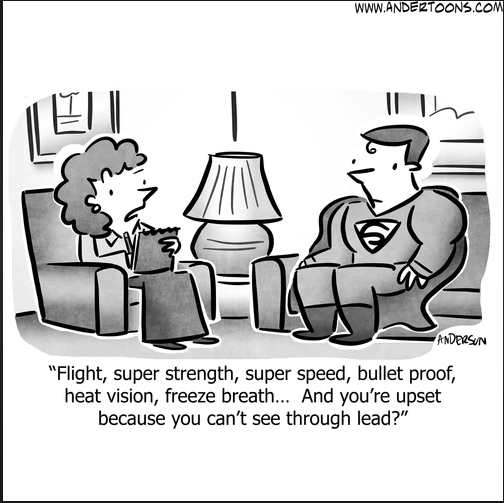
And really finally - this cartoon doesn't get it; dyslexia is not about reading words backwards.


Wednesday, December 11, 2019

Some Gems from Recent Posts

Wow, I've done 22 posts for this blog since last April.  I'll make this the last post of 2019 though and I thought I'd share some of the highlights from the past 8 months. 

To get personal for a minute, I started this Blog after my dad died in March.  He was 101 years of age and we were still discussing politics up to the day before he died.  I keep thinking that one of the things that kept him going was his life-long love of reading and his innate curiosity.  At one of our family gatherings to remember him, I asked my eldest grandson if he would create a blog honouring his great-grandfather and Cameron did so.  And that led me to realize that I too could be a blogger about what I've learned as an educator, both in the classroom and as a tutor.  I think  - I know - my dad would be proud of what I have done (and don't I wish I could share this with him!)

Here's Dad with my sister Corrine on the left and me on the right, in Wenselas Square, Prague.  We took him and our step-mom on a river cruise to celebrate his 90th birthday.  Here's to dads!

Some of the gems from The Tutoring Blog (IMHO):

  • I started blogging with a review of a book called Smart but Scattered.  It's a most readable book with practical suggestions for all ages.  There is also a version for teens, Smart but Scattered Teens.  

  • I have two websites that send regular links to resources to my inbox.  One is understood.org We focus on making real, positive impact in the lives of people who learn and think differently by offering tools, support, and community. Because our differences are our greatest strength. The other is ADDitude magazine  


  • Speaking of fun times, have you played Tenzi yet?  I bought a stack of cards called 77 Ways to Play Tenzi and it is the game of choice for the younger grandchildren.  They borrowed it for one of their camping trips; not only is it fun, but it's compact!

  • One of the skills I tried to teach my daughters and my students is that of self-advocacy.  Here's a link that might be even better than my original post. And this link explains a little more about this important skill. 
  • The 'End of the Day Buddy' system was one of my favourite posts and just recently I saw something similar on understood.org; this time it was called 'Study Buddy'.  

  • In the post on Developing Self-Determination, this point was important: 
    • Model decision-making:  When you're making a decision, talk through it with your children; let them hear the thought-processes that you use to make decisions.  A Pros and Cons list is a great way to help them see what goes into decision-making.

  • Here's a list of books for reluctant readers in Grades 3-5 from Summer Reading . That link led me to this site about graphic novels  and how they can help kids with reading.  I just might have to do an entire post of this topic!

  • When writing the Domino Effect, I found a site entitled Learning Works for Kids.  LearningWorks for Kids was founded on the principle that popular video games and other digital media, when used mindfully and responsibly, can be powerful tools for sharpening and improving children’s academic performance and cognitive Thinking Skills. This is especially true for the children we call Alternative Learners: kids who struggle with everything from mild learning difficulties to diagnosed disorders such as Asperger’s, Dyslexia, and ADHD.

  • As January approaches, I hope you've got a variety of calendars for 2020, including one showing the whole  year at a glance, a monthly calendar, and a weekly one.  I think the monthly calendar is the most important and most useful.  Here's the biggest take-away from The Executive Functions of Time Management about the monthly calendar: 
    • Crossing off the days is a great motivator.  We can see the time gap closing between 'now' and 'then'.  The open spaces are shrinking and we get a really good grasp of time passing.
      • When teachers use this strategy of having the kids cross off the dates, they notice that the students worked more on their tasks because they could 'see' that deadline creeping closer.
  • I wrote three posts recently about ADHD, two actually appearing in October, ADHD Awareness month.  For a variety of reasons, both personal and professional, I have become much more aware of ADHD and relevant resources.  I so wish I knew then (when I was in a classroom) what I know now.  One of the key take-aways from Life Hacks for Adults and Kids with ADHD (and others)  is to look for progress, not perfection.

Thanks, as always, for reading.  Please let me know if there are topics you'd like me to investigate.  I'm getting so much pleasure writing these blogs and it's encouraging to hear from you.

Have a great Christmas.  Enjoy the break; stay well; and keep reading!


Sunday, November 24, 2019

Strength Chains and Lunchbox Notes

First of all, I hope that the writing and the receiving of the Progress report went well.  As a reminder, here's the link to what I wrote back in June about the Kids' version of Learning Skills and Work Habits. (and yes I realize that the cartoon below dates me! - and I had to put in the link for at least one reader who did not recognize who Sam Cooke was!)


Today I want to share two links from one my favourite sites, Understood.org

One is about creating a Strengths Chain and the other is about Lunchbox Notes.  Both are PDFs for which I will add links.

And speaking of 'links', I will share with you how each of these has had an impact on my teaching career and personal life.

The Strengths Chain


Early in the second round of my teaching career, my sister shared with me a small item from Reader's Digest.  It was about a discovery a mom made when going through her adult son's possessions after his death (in the military I think).  She found a crumpled up piece of paper with her son's name on it and a list of positive attributes, which totally defined him in ways she had not thought of for a long time.  She recognized it from his grade six teacher.  That teacher had given each student in the class a list of all the students in the class and asked them to write a positive, truthful comment about each student in the space beside each name.

She then compiled all the comments for each student into individual lists.  Sometime during the year  she gave each student her/his list of attributes. Obviously it meant a lot to that young man because he had kept it close to him for over 20 years - and from the condition of the piece of paper had looked at it often.

I decided to adopt that practice and every year I would hand out a class list, ask my students to fill in the form - anonymously - , and I then compiled it for each student.  To be honest, it was a lot of work but it was a joy because I knew what it would mean to each student and I learned a lot about my students.  And because I am who I am, I included my name on the list!

I made a big ceremony of it when I handed out those lists.  Students would sit quietly and read through all the positive comments.  I still have those lists that my students wrote about me.  It's a powerful exercise.

I can only hope that today's technology would make things a little easier.

Can you use that as a parent?  Absolutely - you could expand it to the wider family circle and have each person fill it in electronically and you could compile the list for each family member and hand them out as gifts at Christmas (it would mean that it wasn't entirely anonymous if you were doing the collating but maybe using Google docs could help you with that!)

So here's a variation on highlighting strengths and attributes. It's a Strengths Chain.  To help kids thrive, recognizing their strengths is just as important as working on their challenges.  


Lunchbox Notes


So here's the 'text to self' link for me on this one.  When John was working for IBM, he travelled a fair amount.  Before he went away I'd write little 'suitcase' notes and hide them in various articles of clothing.  When we talked each night he'd tell me which note he had found that day.  After he retired and golf trips became the norm, I still added those notes.  Once when I went to Australia for two weeks on a Girl Guide trip (lucky me) I found a big hug in my suitcase; one of my daughters had traced her hands on either ends of a long piece of fabric, tucked it in my suitcase, and then told me I'd find a hug in my suitcase!

I'm sure you've done something similar.  In my quest to make things life easier for all of us, here's the link to the Lunchbox Notes.  You can’t be at school to cheer your child on, but a little note in your child’s lunchbox can go a long way. Lunchbox notes can give kids a jolt of confidence in the middle of the school day. And that can be just the self-esteem booster kids who learn and think differently need. 

 I know you'll be creative and find ways to adapt both these 'tools'.  When you do, please share.


Some Updates from recent posts

  • My sister told me that she wanted to make the 50+ Questions to ask at the end of the day more manageable (i.e., how to avoid carrying a big piece of paper around).  I told her that I too was thinking of how to do that (not there yet but maybe Corrine, you'll share what you did create!)
    • one of the questions that intrigued me was 'What colour socks did your teacher wear today?'.  I realized I'd used that once or twice too often when I started to ask my middle grandson another question but starting with "What ...." and he finished my sentence with "colour socks did my teacher wear?"  Corrine - I definitely need that reduced list!
  • After writing about the importance of paper calendars I found an unused 2019 calendar and created my own 'big' calendar to take me to the end of 2019, and then I treated myself to a really good-looking agenda/calendar (after checking that it included the full year on 1-2 pages, as well as 12 monthly calendars).  
  • And I've started work on getting out of the house on time.  It really does take several minutes to get from the bedroom and out the door.  The day after I wrote that post about Life Hacks I thought I'd given myself enough time but lo and behold, it had snowed the night before and that added all kinds of unforeseen delays.  I'm getting there!
  • And finally, as I was searching for images for this post I found this one.  Since one of my memes has always been that it is a sign of strength to ask for help, I found this one powerful.


Wednesday, November 13, 2019

Part 2 of Life Hacks for Adults and Kids with ADHD (actually anyone)

Part 2 of Life Hacks for Adults and Kids with ADHD 

(and the those who love them)


Last week I summarized some thoughts from a webinar I had listened to entitled Win with ADHD: The Best Life Hacks for Adults and Kids presented by Dr. Michele Novotni.  So here's the rest of the summary.

Use Technology to Get Focused and Stay Focused


There are two apps that were recommended by Dr. Novotni.  As always, buyer beware, but both offer free trials.  

The first is Focus@Will. I downloaded it on my iPhone for free (there's an Android version and a web version)  The full name of the app is:  Focus@Will: Control Your ADD


It's a streaming app to help you focus. The write-up on the app site explains that the music you find on Focus@Will cannot be found anywhere else; we remaster, re-edit, and re-produce each track to remove all distracting elements so you can stay productive and focused. 

The website sells a subscription-based service for an annual fee of about $100 USD.  One reviewer of the Android version says that the app is just a 'thin wrapper around the website'.   Check out reviews first.    

The second option is Focus Booster; it too is a free (at first) app.  The iOS version says that there is a 30-day unlimited free trial, after which, if you don't sign-up you will be placed on the starter plan - which is free, with 20 sessions per month.  The individual plan is $2.99 per month, 200 sessions per month.  


Here's a review on the app and how it works.

Other suggestions:

Noise-cancellation headsets to tune out the noise.  There are many noise-cancellation apps available .

Not Quite so High Tech 

Time Timer   Unlike traditional timers that fail to make the abstract concept of time concrete, Time Timer’s visual depiction of “time remaining” provides stress-free time management at work, school and home to make every moment count. Amazon sells it for about $30.


Check out Clocky Alarm Clock on Wheels - this alarm clock moves around; you have to get out of bed to turn it off. Amazon sells it for about $54.00.


The Launch Pad & The Landing Pad

Sounds as if it's either really high tech or the title of a bad space movie but it's really about trying to get out the door on time.    The Launch Pad and Landing Pad is a dual function spot; it's where you drop stuff when coming home (the landing pad); it's where you pick up the items as you leave the next morning (the launch pad).  It's where you put all the  things you need for the next day, as close to the door as possible - backpack, note to remember your lunch, finished homework and so on. This should be your space and no one else's.  Be creative - is it a basket?  A big hook for the backpack?  A colourful bag perhaps.  It's your help-keep-you-organized spot.


The Laundry Options

I did not know about Colour Catchers before I watched the webinar.  For those who are time challenged, disorganized, forgetful (did I miss anyone?) check out 'colour catchers'. Just throw all the laundry in together.  A colour catcher catches loose dyes that seep into clothing during washes.  It prevents the dye from running or bleeding into the other clothes.  You can make your own or use a product from Shout: 


Maybe the Laundry Doesn't Need to be Folded and Put Away

All you might need is a way to separate the clean from the not clean.  Baskets work - one for the dirty clothes, one for the clean clothes.  You could label the baskets 'Coming' and 'Going'!


Get Moving to Get a Brain Break

This is such a standard response to how to get motivated but it's worth repeating.  Dr. Novotni had a client who would go for a run before having to do a 'non-preferred' activity.  So if something is out there and you know it's not going to be fun or interesting or you're avoiding it for whatever reason, do something active.  The Executive part of your brain will reward you with a willingness to settle down and tackle what you were avoiding.  


Here's an introductory link to Brain Gym.  I'm going to write a post in the near future about my experiences with the activities but if you're interested in simple exercises to stimulate different parts of the brain, check the website.


Tuesday, November 5, 2019

Life Hacks for Adults and Kids with ADHD (and others)

This is my second entry for ADHD Awareness Month (it's never too late!)  It's about life hacks for adults and kids.  There's a lot of good stuff in here, all culled from a webinar presented by ADDitude magazine last month (all sources and acknowledgements are at the end of this post). And the hacks aren't limited to those with ADHD - there are good ideas in here for everyone.


Dr. Michele Novotni, the presenter, made an impression because she told stories to supplement her ideas; I'll try to share them as best I can.

There are nine (9) points in this post.  More to come.  Here they are:

  1. Look for progress, not perfection
  2. Limit critical self-talk
  3. Find your tribe
  4. Find an expert
  5. Optimize medication
  6. Manage your time
  7. Time yourself
  8. Think backwards
  9. Ask a question, and then ask another

Look for Progress, Not Perfection

Folks with ADHD will miss the mark at times, so praise along the way is critical, even from/to ourselves.  Dr. Novotni told the story of her son getting ready to go to a relative's wedding.  When he got there and was changing into the appropriate clothing, he realized he had everything except his dress pants.  So he wore his suit coat over his jeans.  Some of the people around him focused on the fact that he couldn't get it together; his family chose instead to focus on the fact that a) he got there - on time; and b) he got there with most of his outfit!  Glass half full!


Limit Critical Comments/Self-talk

This is for those who listen to that negative voice inside their head (probably propped up by those wedding guests who could see only a glass half empty).  It takes seven (7) positive comments to erase one negative one, so be careful.  One of Dr. Novotni's students told her that he just stopped talking (and listening) to himself so he didn't have to say seven (7) positive things to himself.  Whatever it takes!


Find Your Tribe

Look for peer support, those who understand you; it's exhausting having to do this on your own.  This time her story was about her dad, who has ADHD.  She was trying to persuade him to attend an ADDA (Attention Deficit Disorder Association) conference but he was reluctant because he knew he was annoying and didn't want to hang out with other annoying people!  However, he did go and found it a pleasant experience to be himself, with like-minded people!


Find an Expert

If you're the one who created all your messes, you're probably not the best person to try to fix them.  There are professionals out there who can help; consider adding them to your team, be they a physician, psychiatrist, psychologist, coach, or an organizational consultant.

But a caveat - make sure the professional you choose is someone who is really good at ADHD.  Dr. Novotni's professional advice is that it is really important to find someone who knows their ADHD meds and what they can and cannot do.


Optimize Medication if You are Using It

Dr. Novotni's experience is that too often people stop their meds because - It Works!  I don't need it anymore. Or they stop when the first one or two trials don't make a difference.  She made the connection to eye exams - you think the first corrective lens is good, then the next one - wait, is that better or not?  It takes time and patience to find a good fit, because no one person with ADHD is like any other person.  

The professional term for finding the right dosage with the fewest side effects is called Titration.  


Manage Your Time

If your goal is to arrive right on time (not a bad goal, eh?) think of how little it would take to make you late - a traffic jam, a wrong turn, missing the bus - the best laid plans?????

Set your arrival time for 8 1/2 minutes before the 'on-time' time.  (The 1/2 is important - kind of like the sales price for $1.99 - we never think of it as being $2.00; in this case, the 1/2 is a good psychological reminder).


 Time Yourself

ADHD folks are terrible at judging time - knowing how long something takes.  I've referenced this in an earlier post - sometimes we put things off because we think it will take tooooooo long; when we actually time how long it takes,  it really is not that long.

But it works the other way.  Time yourself taking that 'short' shower.  How short is it really? So if you tell someone you will be right with them but you just have to take a shower, just exactly how long is that shower?  Now add that information when you......

Think Backwards

Start with the end result - you walking out the door.  What do you have to do to get to that point?  Add in each task (even the very minor ones, because they all add up).  Time yourself looking for your coat, your boots, your keys, locking the door, and so on.  After you have timed all those events, you now have a realistic idea of how much time to give yourself to get out the door - on time, 8 1/2 minutes early!

Ask a Question, and then Ask Another

Ask a question, and then ask a follow-up question!  It makes people feel appreciated.  Remember the thought in the previous post, about not always being able to 'read the room'?  If we were to remember this one skill, our social adeptness would go through the roof!


I'm going to stop now because that's about all anyone can read and absorb.  So this Webinar synopsis is going to become more than one.  Stay with me - Part 2 is coming next week.

Resources